How we work
You will never wonder where the work stands.
Every engagement runs on the Lean Pyramid 6.0, our operating model for the agent era, and stays visible in Maestro, the operating system we built to run it. This page shows you both, exactly as our clients see them.
The Lean Pyramid 6.0 · Jidoka edition
One model, three layers, humans in charge
Twenty years of Lean and software practice condensed into the question this edition answers: who does the work, and how do humans govern it?
TRUST
VALUE
Strategy
Human intent
Humans decide why the company exists and where it goes. No agent sets direction.
- Start with purpose
- Share principles and values
- Develop people
- Establish organizational vision
- Develop breakthrough objectives
- Deploy strategy
Services on this layer
Maestro · the delivery operating system
The whole engagement on one screen
Our pods and our agents work inside Maestro, and your team reads the same board we do: deadlines with forecasts drawn from measured throughput, decisions waiting on named people, impediments in the open, and a burn-up that admits when a release is late. There is no status to report, because everything already shows. And it is the same operating system you can run without us.
The board speaks a small vocabulary:
Deadlines, work in progress, and a release that admits it is running late.
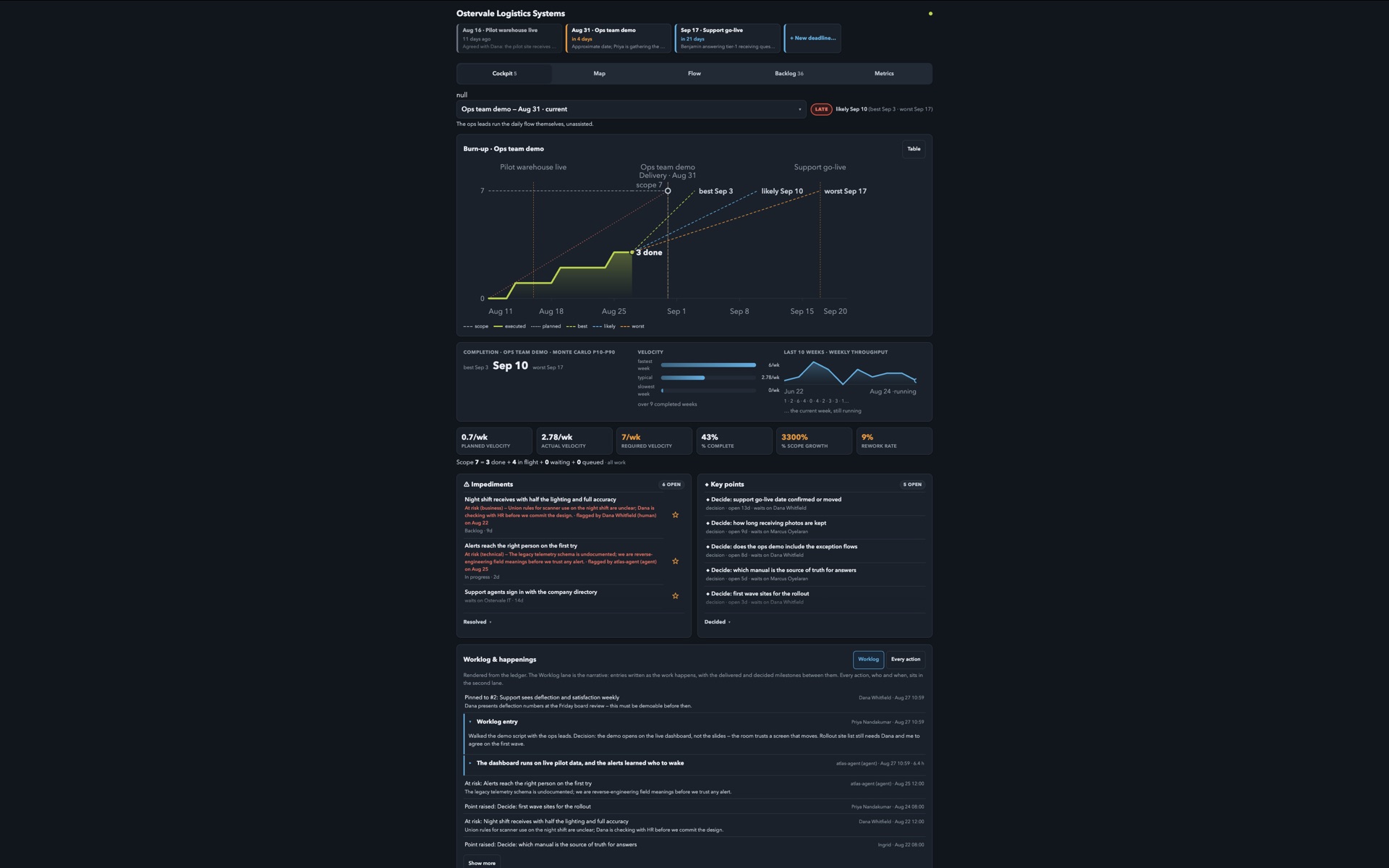
A release running late says so, with best and worst dates. Decisions wait on named people, and the work log records humans and agents alike.
Agents get verified. People get trusted.
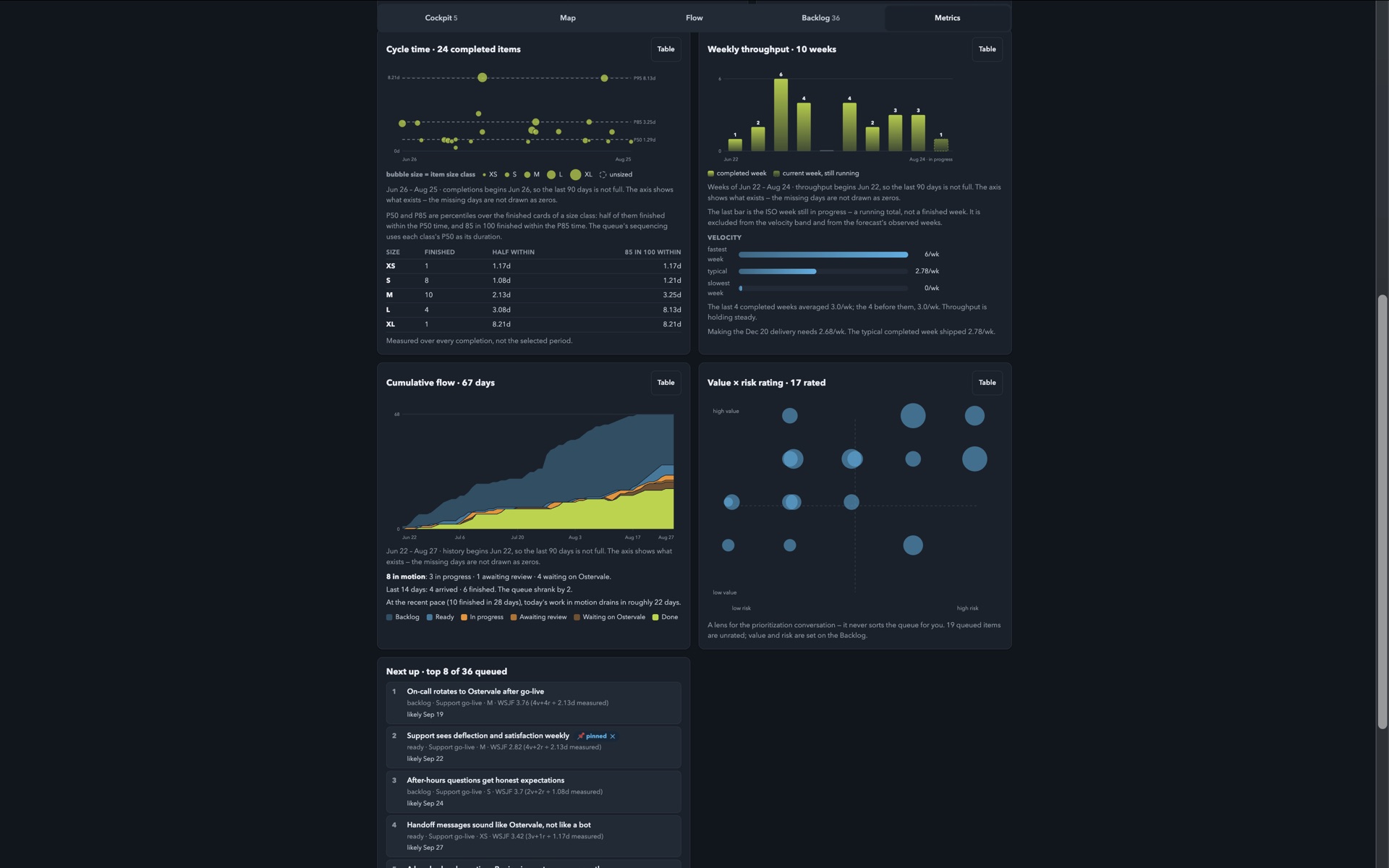
Cycle time by size class, throughput with velocity bands, cumulative flow, and the queue ordered by value over measured duration. Where history is short, the charts say so.
The record measures work items and agent actions. It is never used to measure a person.
The loop
Software that documents itself into your support agent
Teams that build with Maestro and support with Benjamin get a loop nobody else offers: when a feature ships, Maestro turns what changed into documentation and feeds it to Benjamin, so your support agent answers questions about the new feature the week it goes live. Both ends run in production today; the bridge between them is what we are building now, on our own engagements first.
Problem in
The business names the pain; the pod shapes it into work on the board.
Governed delivery
Pods and agents build under the Pyramid delivery model, every step visible in Maestro.
Release
The change ships to production through the automated path.
Docs become knowledge
Maestro writes what shipped into documentation and feeds Benjamin.
Customers answered
Benjamin resolves questions about the feature, grounded in the fresh manual.
That card on the demo board reading "Release notes become Benjamin knowledge automatically" is this loop, exactly as it will run.
See it on your own problem
Bring one workflow and we will show you the board it would run on.